
Amrit Sarovar Initiative, Jal-Jeevan-Hariyali, and Public Engagement: An Integrated Perspective
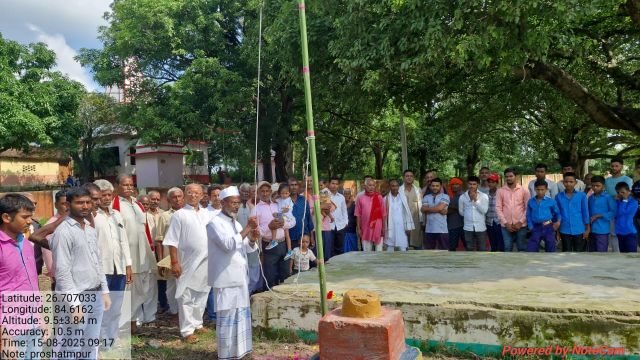
Yesterday, 26 January, several activities were planned to promote civic participation, including tricolor hoisting ceremonies to symbolize national unity and ownership of water resources. Heritage walks highlighted the historical significance of Amrit Sarovar sites. Selfie points, fairs for local artisans, essay and poetry competitions on water conservation, and Nukkad Nataks on environmental themes were also organized..

The Amrit Sarovar Initiative and the Jal Jeevan Hariyali campaign are two complementary programs shaping Bihar’s approach to water, ecology, and community participation. While Amrit Sarovar is a central government initiative focused on revitalizing lakes and reservoirs to enhance water security, biodiversity, and livelihoods, Jal Jeevan Hariyali is a state-led campaign aimed at reclaiming and restoring water bodies across the state. Together, they are transforming how communities view and interact with water resources, from protectors of public assets to stewards of living, productive landscapes.
Amrit Sarovers are the restored or constructed water bodies, including ponds, lakes and reservoirs with a focus on water conservation, groundwater recharge, climate resilience, flood moderation, biodiversity enhancement. The key components of Amrit Sarovers are construction and desilting of water bodies, Construction and rehabilitation of spillways, bunds, and feeder channels. Landscaping, afforestation, and ecosystem restoration around lake perimeters are the additional components with digital monitoring, maintenance, and participatory governance
Jal Jeevan Hariyali is a major, multi-department initiative designed to reclaim, restore, and revitalize water bodies across states. It is coordinated by multiple government departments working together to maximize impact and sustainability. The department includes rural development, revenue, water resource, forestry, urban development, health, education, agriculture, panchayati raj, and local governance departments with shared planning, funding mechanisms, and monitoring frameworks to ensure integrated outcomes. It encompasses systematic removal of encroachments and illegal structures around ponds and lakes. desiltation, dredging where required, and restoration of natural hydrology. Rainwater harvesting integration, recharge pits, and check dams to boost groundwater levels and sustainable abstraction limits and seasonal balancing of water resources. Additionally Jal Jeevan Hariyali looks at Ecosystem restoration and green cover enhancement through planting of native species, wetland creation, marsh restoration, biodiversity-friendly landscaping, soil stabilization, erosion control, and sediment management.
Both the interventions aims to Climate resilience and adaptation through design features that reduce evaporation, enhance microclimates, and improve flood moderation, drought risk reduction through integrated watershed management. And both have common idea in Community involvement, landscaping, eco-tourism, maintenance and technology and data-driven Management like use of GIS, remote sensing, and digital dashboards to track water storage, recharge, biodiversity, and inclusive participation.
Together, these programs transform how communities view and interact with water resources, shifting from guardians of public assets to stewards of living, productive landscapes.
- A State-wide Campaign of Public Sports Grounds: Lifeblood of Community Recreation in Bihar
- Small Ponds, Big Impacts: How NREGA-Driven Private Ponds Are Transforming Rural Bihar


