
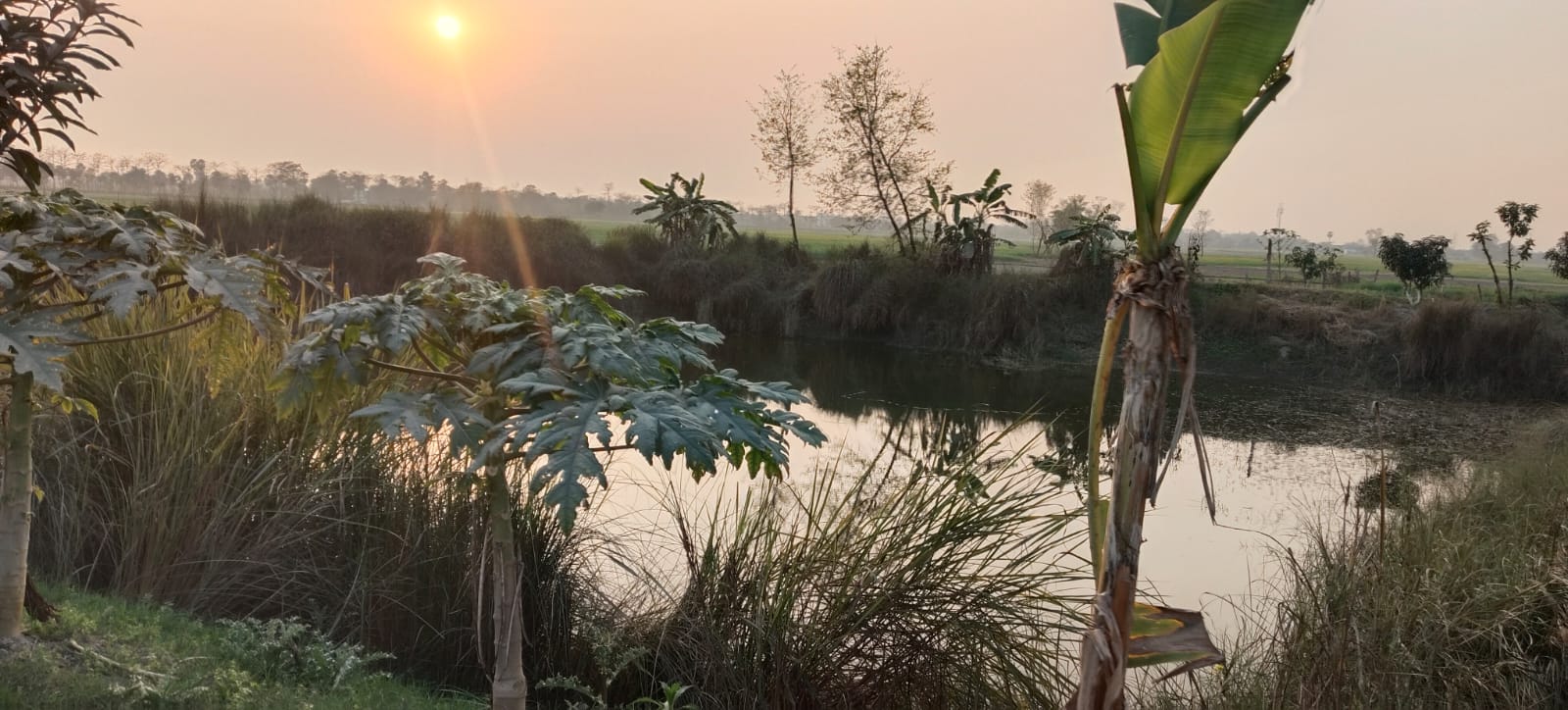
Small Ponds, Big Impacts: How NREGA-Driven Private Ponds Are Transforming Rural Bihar
In Bihar, water scarcity is not a universal crisis, but regional disparities exist. Northern Bihar, in particular, enjoys relatively better groundwater levels. Yet, during the monsoon, the abundance of rainfall often overwhelms the landscape, while the dry season creates demand for reliable water storage. Under the Jal- Jeevan- Hariyali initiative, private ponds dug on beneficiaries’ land through the MGNREGA (Mahatma Gandhi National Rural Employment Guarantee Act) program have emerged as a practical solution. In districts like East and West Champaran, these ponds are playing a crucial role in rainwater harvesting, recharge of groundwater, and improving rural livelihoods.
Popular as ‘Khet-pokhari’ a private pond construction on benefit holders’ land under MGNREGA. At the time of construction labour is provided by the beneficiary and their family members, fostering ownership and skill development. Increasing agricultural productivity through reliable water availability, reducing dependence on groundwater for irrigation and creating a scalable model for rainwater harvesting during the monsoon were the primary objectives.
A typical pond used for water storage during the monsoon measures 100 feet by 100 feet with a depth of 5 feet, capturing a substantial volume of rainwater. Over the years, hundreds of such ponds have been constructed in some blocks, and their value extends beyond crop irrigation. They symbolize a shift from aspirational plans to tangible gains in livelihoods and resilience.
Stories of Livelihood and Innovation
What makes these ponds particularly compelling are the diverse and creative ways beneficiaries leverage the resource:
 Champa Khatun, Mahoddipur Panchayat, Majhauliya Block, Paschim Champaran
A beneficiary who turned the pond’s embankments into a micro-enterprise by rearing desi chickens (poultry) along the margins. Last year, she diversified income with fish farming and poultry, making the pond a preferred place in her household.
Kamlesh Kumar, Tikulia Panchayat, Motihari Block, East Champaran 
Began fish farming in the pond and added a steady stream of income through aquaculture. The pond became a central economic activity for the family.Kamlesh has informed and inspired people around him about its benefits, as a result more beneficiaries are also digging ponds on their private land and benefiting in this way
Harishankar Sahani, Veerchhapra Panchayat, Pipra Kotahi Block, East Champaran
Planted Jamun trees around the pond’s perimeter. The young trees promise additional fruit yield starting next year, providing supplementary revenue alongside fish farming.

A Living Catalog of Benefits
Economic diversification: Pond ecosystems enable multiple income streams—fish farming, poultry, fruit trees, and even small-scale horticulture.
Year-round utility: While the primary purpose is water conservation and irrigation, ponds increasingly serve as micro-ecosystems supporting biodiversity and secondary crops.
Community motivation: When beneficiaries succeed financially, the ponds become visible, replicable models that encourage others to participate in similar schemes.
Resource sustainability: The approach aligns with the goal of reducing groundwater extraction by promoting surface-water storage and re-use.
Policy and Governmental Momentum
The Bihar Rural Development Department is recognizing and expanding the potential of such ponds beyond water storage. There is a growing push to accompany all government-built ponds with livelihood-enhancing activities—primarily fish farming and allied enterprises. The intent is to convert these structures from mere water-holding bodies into holistic livelihood assets that contribute to rural prosperity.
Why It Matters for Bihar
Resilience in monsoon variability and flash floods: Capturing and storing rainwater mitigates the risks associated with drought years and uneven rainfall distribution.
Income stability for rural families: Diversified income streams can cushion farm income fluctuations and improve living standards.
Community-level growth: Successful pond models can catalyse broader community development, from agriculture to micro-enterprises.
Environmental benefits: Managed pond systems support groundwater recharge and can improve local micro-climates, contributing to ecological balance.
Farm ponds created under the Jal-Jeevan-Hariyali umbrella, with labour contributed by beneficiaries under MGNREGA, represent a compelling model of sustainable development in rural Bihar. By transforming water storage structures into versatile livelihood platforms, these ponds demonstrate how prudent design, local ownership, and policy support can converge to improve productivity, resilience, and incomes. As districts like East and West Champaran continue to document and share these stories, the wider agricultural economy of rural Bihar stands to gain—turning a small water-holding asset into a big leap forward for families and communities.


